

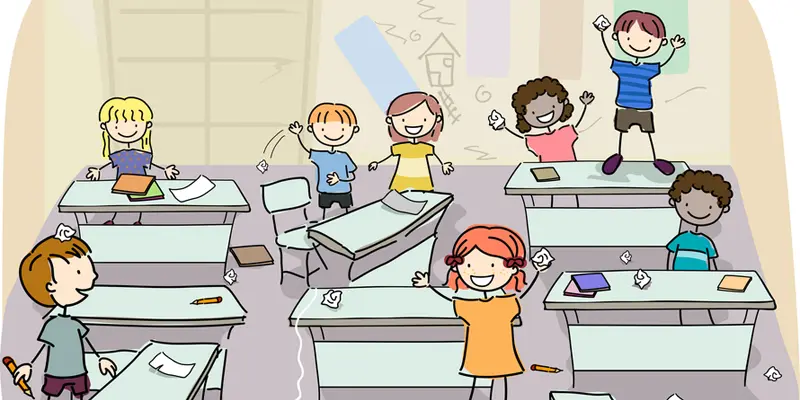

You鈥檝e planned a great lesson, but within five minutes the room sounds like a football crowd. Desks scrape, pencils roll off tables, and half the class are chatting to each other. If that sounds familiar, you鈥檙e definitely not the only one. Managing a large group of students can test even the most experienced teacher.
Whether you鈥檙e teaching children or teenagers, classroom management isn鈥檛 really about control, it鈥檚 about balance. You鈥檙e trying to keep enthusiasm without losing focus, noise without losing attention, freedom without losing structure. A big class can be full of energy and fun, but it can also go off track in seconds. The key is to build small routines and habits that help everyone know what鈥檚 expected, and make learning feel safe and enjoyable.
1. Establish shared routines and expectations
The first few lessons are where you set the tone. Children and teens like knowing what to expect – it helps them feel settled. A few clear routines and shared 鈥渁greements鈥� go a long way towards making lessons run smoothly.
- Make the rules together: Rather than arriving with a long list of rules, agree on three to five 鈥渃lass commitments鈥� together, such as 鈥淟isten while others speak鈥�, 鈥淯se English first鈥�, and 鈥淭ake care of materials鈥�. When students help decide the rules, they feel a sense of ownership. Keep them visible and refer to them often – a quick point towards the wall is more effective than a long speech.
- Model what you want to see: Stay calm, listen properly, wait your turn – all the things you鈥檇 like them to do. Young learners copy the behaviour they see every day more than the things we tell them once in a while.
- Stick to your routines: Start and end each class in a similar way. For example, open with a two-minute warmer (see 欧美日b大片 warmers and fillers), and close with a short reflection or 鈥淲hat did we learn today?鈥� question. Predictable openings and endings help students focus during the main part of the lesson.
- Be fair and consistent: Follow through when you say you will, whether it鈥檚 praise or correction. Students notice inconsistency straight away, and once trust slips, it鈥檚 hard to rebuild.
Once learners know what鈥檚 expected, and see that you鈥檒l respond calmly and consistently, the room starts to manage itself… at least most of the time!
For more ideas on setting up shared agreements and class rules, see 10 Ways to Create a Positive Learning Classroom Environment with Children.
2. Manage energy, not just behaviour
In most large classes, what looks like bad behaviour is often just energy that hasn鈥檛 been directed anywhere yet. Your job is to guide it, not stamp it out.
- Mix up the pace: After an energetic activity, follow with something quieter, like drawing, a short writing task, or listening. After quiet work, bring them back with a short movement or a quick speaking pair task. The balance keeps the energy healthy and stops the extremes of 鈥渢oo quiet鈥� or 鈥渢oo wild鈥�.
- Plan your transitions: The noisy moments usually happen between activities. Tell them what鈥檚 happening and what they need: 鈥淲e鈥檙e changing partners now – one pencil and your worksheet.鈥� Clear instructions before they start moving prevent chaos afterwards.
- Use presence instead of volume: Move around the room calmly. Standing near a chatty group is often enough to bring them back without saying a word. It鈥檚 quiet but effective.
- Save your voice: When things get loud, stop speaking, raise your hand, or use a calm signal you鈥檝e practised with them. Silence catches attention faster than shouting does.
When you treat energy as something to manage rather than control, you start to get flow – lessons that feel lively but still under your guidance.
3. Use group dynamics to your advantage
Children and teens care deeply about what their classmates think. That can work against you, or it can work for you. The trick is to use it positively.
- Work in teams: Name groups, give them colours or mascots, and award points for effort, teamwork, and English use, not just the right answers. Shared responsibility builds cooperation and friendly competition.
- Rotate small roles: Timekeeper, board writer, materials monitor – small jobs give busy students focus and give quieter ones a reason to speak up.
- Offer small choices: 鈥淲ould you rather present now or after the next group?鈥� or 鈥淒raw or write your answer?鈥� A little choice gives students a sense of control, which often reduces resistance.
- Notice the positives aloud: Mention what鈥檚 going well rather than who鈥檚 off task. A quick 鈥淚 like how Group 2 is sharing ideas鈥� shifts attention without embarrassment.
4. Design activities smartly
Some games that work with 6 students don鈥檛 work with 40, and that鈥檚 fine. The aim isn鈥檛 to remove movement or fun, just to make it manageable. A little thought during lesson planning (see Planning English Classes for Children) makes all the difference later when the energy starts to rise.
- Movement within limits: Instead of games that involve running or crowding, use ones that let them move from their seats – stand/sit gestures, mini whiteboards, or quick-response cards. These make great warmers and keep the pace lively without losing control.
- Keep everyone active: In grammar or storytelling activities, have all groups work at the same time while you walk around and listen. Then choose one person from each group to share. Everyone participates, but the room stays calm.
- Add a twist: Try 鈥淢ystery Student鈥� – secretly pick one student whose teamwork or English use you鈥檒l highlight at the end. It adds curiosity and keeps attention focused.
Planning with the size of the class in mind doesn鈥檛 make lessons less fun, it makes them run better. When everyone knows what to do, they enjoy it more, and so do you.
5. Attention cues and calm-down signals
A few simple signals save you from ever having to shout. The key is to teach them early and use them consistently so they become second nature.
- Call and response: Clap a short pattern or say 鈥淗ands on heads!鈥� and have students copy you. Keep it the same each time so it becomes automatic.
- Countdowns: 鈥�3, 2, 1 – eyes on me.鈥� Practise when things are calm, not in the middle of noise, so it works when you need it.
- Visual cues: Dim the lights, raise your hand, or hold up a 鈥淪top鈥� or 鈥淔reeze鈥� card. Visual signals cut through noise even when voices don鈥檛.
- Language cues: Teach short phrases like 鈥淓nglish ears!鈥� or 鈥淔reeze!鈥� and practise them together. It gives you a shared language for attention, and doubles as listening practice.
The goal isn鈥檛 silence for the sake of it, just getting everyone back with you so you can keep going together.
6. Keep learners emotionally engaged
When students feel noticed and safe, you don鈥檛 need to 鈥渕anage鈥� them as much. Small moments of connection go a long way.
- Start with a hello: Greet students if you can. Use their names (and remember them), notice small wins, and show genuine interest. Even one personal comment can change the mood of the whole class.
- Use humour carefully: A light joke or a bit of silliness can reset a restless group, as long as it鈥檚 kind and not at anyone鈥檚 expense.
- Notice the mood: If you can see they鈥檙e tired or frustrated, name it and adapt. 鈥淵ou look tired – let鈥檚 do this one sitting down.鈥� It shows empathy and helps everyone reset.
- Celebrate effort: Recognise progress, not just right answers. A learning wall, small team points, or a quick 鈥淭oday I learned鈥︹�� moment keeps motivation up.
When the room feels emotionally safe, students try more, speak more, and learn more, and the atmosphere can change completely.
7. Sample large-class routines
Routines are what make a big class manageable. They keep things moving and save you having to explain everything from scratch each time. Here are a few that work even with 30鈥�40 students:
- Two-minute start: 鈥淲rite one thing you remember from last lesson. Share with a partner. Add one new idea together.鈥� It focuses attention straight away and gets language flowing.
- Task-flow pattern: Demonstrate (1 min) 鈫� Pair practice (3鈥�4 min) 鈫� Group share (2 min) 鈫� Whole-class check (2 min). Once this becomes routine, transitions happen quickly and naturally.
- Fast finishers: Keep a few quick 鈥渆xtra鈥� tasks ready – puzzles, flashcards, or short creative tasks – to stop waiting time turning into noise.
- End routine: Finish with a quick confidence check (鈥淭humbs up if you feel good about today鈥檚 grammar鈥�) and one takeaway (鈥淭oday I learned鈥︹��). It ends things neatly and gives a sense of closure.
8. For online classes
Large online classes bring their own challenges – not noise, but silence. You can鈥檛 always tell who鈥檚 with you behind a muted mic. Clear structure and steady tone help a lot here too.
- Purposeful breakout rooms: Give each group a simple, time-limited task and clear roles (speaker, note-taker, timekeeper). Pop in briefly to check progress.
- Non-verbal check-ins: Polls, emojis, or quick reaction icons are great for quick understanding checks. 鈥淭humbs up if you agree, heart if you鈥檙e not sure yet.鈥�
- Keep the flow steady: Use the same overall shape each week – warm-up, input, practice, review. Familiarity helps them relax and focus on the task.
- Stay calm with tech issues: If things glitch, pause, smile, restate the task, and carry on. The calmer you are, the calmer they鈥檒l stay.
Online teaching is really about connection, not control. When learners feel seen and included, they take part more, even through a screen.
See How to Teach English Online Effectively for more ideas on breakout rooms and routines.
9. Activity ideas that won鈥檛 tip into chaos
Here are a few easy activities that keep everyone involved without the room descending into noise:
- Gallery walk (seated): Instead of moving around, pass papers clockwise every 30 seconds and add one idea or sentence. It鈥檚 collaborative and active, but calm.
- Board quizzes: Teams hold up A/B/C cards while you tally the scores on the board. Instant feedback, mild competition, no chaos.
- One-minute stories: Pairs co-write short stories using a story grid, then one spokesperson reads it aloud. (See also interactive storytelling.)
10. Assessment without stress
With a large class (and in fact with any class) you can use simple, low-pressure activities to find out what learners have taken in, without disrupting the flow.
- Quick writes: A 90-second response to a prompt (鈥淲hat did you learn today?鈥�). Swap papers and have peers highlight one thing they liked.
- Spotlight one skill: During an activity, focus on one behaviour – taking turns, using a grammar point – and give short feedback: two positives and one thing to try next time.
- Exit slips: 鈥淭oday I learned鈥︹�� or 鈥淥ne question I still have鈥︹�� – a quick reflection that tells you what to revisit next time.
Why these strategies work
These strategies aren鈥檛 clever tricks – they鈥檙e really just about creating the right conditions for learning. The idea is supported by some well-known principles in language education. When students feel relaxed and supported, they鈥檙e more willing to take risks and try new language (Krashen, 1982). When they interact and learn through each other, progress happens naturally through communication and collaboration (Vygotsky, 1978). And when the emphasis is on encouragement and clear routines rather than constant correction, it helps build habits of cooperation and self-control that last beyond your lessons (Sugai & Horner, 2006).
In short, calm structure and emotional safety go hand in hand, for your learners, and for you.
Final thoughts
Large classes of children or teens can be noisy, unpredictable, and full of surprises, but they can also be full of warmth, laughter, and energy. The goal isn鈥檛 silence; it鈥檚 focus and connection. With clear routines, calm consistency, and a bit of flexibility, you can turn a big group into a community that learns well together. You don鈥檛 have to choose between being firm and friendly – you can be both. And when your students trust you, that鈥檚 when the best teaching happens.
Further reading
- Krashen, S. (1982). Principles and Practice in Second Language Acquisition.
- Vygotsky, L. (1978). Mind in Society: The Development of Higher Psychological Processes.
- Sugai, G., & Horner, R. H. (2006). A Promising Approach for Expanding and Sustaining School-Wide Positive Behavior Support. School Psychology Review, 35(2), 245鈥�259.





3 comments
Arlene
Thank you for the tips, I am a first time ESL teacher in South Korea at a middle school, and I’m 22! The students have realised that I am young, and many of them seem to think that I will not enforce discipline, added to this it is easy to feel intimidated, I have started using the tips given and am starting to see results! Thank you.
Mehreen
My class is really naughty and this is my first teaching experience. You shouldn’t say again and again to a class to keep quiet! You should get them busy in an activity, I was searching for some useful articles on class management and I found this one really helpful. Thanks so much for sharing:)
Catty
Thanks for the ideas and tips. All of them work out! Trust me. Even after teaching for 15 years it’s good to read once again what we’ve learned before and sometimes we forget so easily because of routine. It’s a challenge for any teacher faced with a large group with different levels and interests.