


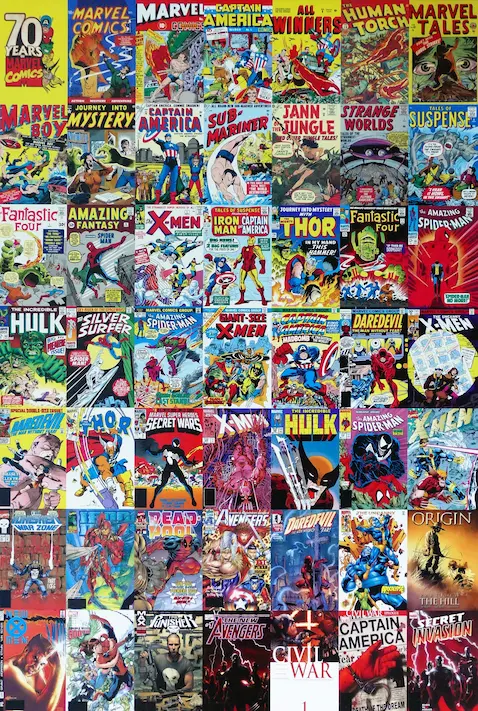
Why visual humour works
A single image can tell a whole story. Whether it鈥檚 a comic strip, a meme, or a 20-second animated clip, visuals carry emotion, tone, and context that words alone can鈥檛. They help learners connect language with feeling – the 鈥渁ha鈥� moment when a phrase suddenly makes sense.
For many learners, pictures lower anxiety and make meaning easier to grasp. In Krashen鈥檚 terms, they lower the affective filter – the emotional barrier that can block language acquisition. When the pressure is low and curiosity is high, learners are more likely to take risks, guess meaning from context, and remember what they hear or read.
Visuals also fit with how the brain naturally processes language. According to studies on dual coding (Paivio, 1991), combining verbal and visual input helps memory retention and recall. In short: when we see it and hear it, we remember it better.
And finally, humour itself is motivating. A comic panel or short meme invites emotional engagement – a smile, a small laugh, or even disagreement. It turns language into something to react to, not just study.
From cartoons and comics to memes and animations
Cartoons and comics are the classics: colourful mini-stories with dialogue that models everyday English. But their modern counterparts – webcomics, memes, short GIFs, and animations – work just as well, often with broader appeal and easier access.
You can group them roughly by use:
| Type | Best for | Typical task |
|---|---|---|
| Cartoons / animated clips | Listening & speaking | Mute and predict dialogue; summarise; role-play a scene |
| Comics / webcomics | Reading & writing | Add captions; reorder panels; rewrite from another perspective |
| Memes / GIFs | Vocabulary, pragmatics, culture | Explain the joke; identify tone; make your own version |
| Silent comics / visual jokes | Descriptive language & speculation | Describe, guess, narrate in past or future tenses |
This flexibility makes them ideal for everything from quick warmers to deeper project work.
Getting started: building curiosity and comfort
A nice entry point is to start with something personal. Ask students about the characters or online humour they like – it could be Peppa Pig, SpongeBob, Calvin and Hobbes, One Piece, or an Instagram meme account. This short discussion immediately lowers barriers and reminds students that English exists in the media they already enjoy.
Then, show one simple visual – perhaps a single comic panel or meme – and guide a short discussion:
- What鈥檚 happening here?
- What emotions can you see?
- What do you think the characters might be saying?
- Is it funny, strange, or serious?
- Does it remind you of anything in your own culture?
This 鈥渄escribe and guess鈥� stage builds vocabulary and promotes active observation before you even touch the written text.
Classroom ideas: practical applications
1. Caption challenge
Show a comic panel or still from a video without any text. Students write or dictate their own captions, then share and compare. You can vote for the funniest, the most realistic, or the most creative.
Variation: For beginners, pre-teach a few key phrases (鈥淟ook out!鈥�, 鈥淲hat are you doing?鈥�, 鈥淭hat鈥檚 not fair!鈥�) and let them fill the blanks.
2. Predict the line
Play a short animation (20鈥�30 seconds) with no sound. Pause at a key moment and ask learners to predict what will be said next, or what a reply might be. Then play the real version and compare. This is a great way to practise functional language (requests, advice, refusals).
3. Rewrite and extend
Give students a short three-panel comic. Ask them to draw or write a fourth panel to continue the story, or rewrite one of the existing panels in a different style. For example, turn an informal dialogue into a polite one, or make a happy ending into a misunderstanding. This works well for B1+ learners exploring tone, register, or narrative sequencing.
4. Grammar in context
Pick a comic or meme that clearly illustrates a grammar point, for example:
- Present continuous: 鈥淲hat鈥檚 happening in this picture?鈥�
- Modal verbs: 鈥淗e should have checked the sign first.鈥�
- Third conditional: 鈥淚f I鈥檇 known, I wouldn鈥檛 have鈥︹��
After the laughter fades, guide learners to notice the structure, then create their own examples using the same pattern.
5. Cultural decoding
Comics and memes often rely on shared cultural knowledge. Use this to start short intercultural discussions:
- 鈥淲hat makes this funny in English?鈥�
- 鈥淲ould it still work in your language?鈥�
- 鈥淗ow could you adapt it for your culture?鈥�
Students begin to see how humour, politeness, and exaggeration vary across contexts – a subtle but powerful lesson in pragmatics.
6. Make your own comic or meme
For writing practice, let students create a short comic or meme in pairs. Use paper grids, free tools like , or meme generators such as . Encourage short, natural dialogue and clear emotion. Display their creations around the classroom or in a shared digital space. You can even make a 鈥淲eekly Meme Wall鈥� or 鈥淐omic of the Month鈥�.
Beyond humour: emotional storytelling
While funny comics are an obvious choice, you can also use visual stories that encourage empathy or reflection. Silent comic artists like Shaun Tan (The Arrival) or short Pixar films (Piper, For the Birds) work well for this. Ask questions such as:
- 鈥淗ow do you think this character feels?鈥�
- 鈥淲hat could this scene mean?鈥�
- 鈥淲hat lesson or moral could you take from it?鈥�
This helps older or higher-level students engage with language at an emotional level, moving beyond simple vocabulary exercises. You can also build on this idea through interactive storytelling activities, where learners help shape what happens next, or by using short video clips to create shared moments of suspense or empathy. Both approaches use narrative to make language more meaningful and memorable.
For online or blended teaching
Visual humour and storytelling translate well to online lessons.
- Screen share: share a single image or comic and use chat for captions or predictions.
- Breakout rooms: give pairs different memes or short strips to interpret, then share their explanations with the group.
- Meme reaction task: show several images and have students post emojis or short reactions (鈥淭hat鈥檚 ridiculous!鈥�, 鈥淚 can relate!鈥�).
- Creative homework: students find or create one image each week that expresses a feeling, phrase, or idiom, then explain it next lesson.
For quieter online learners, these short, visual activities feel less intimidating than long speaking turns and can lead to lively interaction.
How to choose material
Keep a few principles in mind:
- Short and clear: One page, three panels, or a 30-second clip is ideal.
- Accessible language: If there鈥檚 too much text, crop or cover some speech bubbles.
- Age-appropriate humour: Avoid references that could confuse or offend.
- Cultural balance: Check that jokes or expressions don鈥檛 rely too heavily on local slang or stereotypes.
- Learning focus: Always tie visuals to a clear aim – grammar, vocabulary, discussion, or creativity.
You can find suitable examples on sites like GoComics, Pixton, Canva鈥檚 comic templates, or The Noun Project for simple line illustrations.
Assessment and reflection ideas
Cartoons and memes can also serve as light forms of assessment, both formative and informal:
- After a grammar lesson, ask students to design a one-panel comic using the target language.
- For writing assessment, have them storyboard a simple story.
- For speaking, use a comic strip as a prompt for retelling or improvisation.
Because the task feels relaxed and creative, you get authentic language performance without the usual test anxiety.
Tips for success
- Keep the balance: Use visuals as a springboard, not the main act – the learning objective should always come first.
- Model creative risk-taking: Laugh at your own captions or show your own rough sketches to build trust.
- Reuse student work: Their comics can become revision materials or warmers for future classes.
- Encourage originality: Let them adapt memes or stories to their own lives – the more personalised it is, the more memorable it becomes.
- Link to writing and speaking: Use visuals as a bridge between receptive and productive skills.
Why it matters
Incorporating humour and visual media is more than a fun diversion. It draws on well-established principles in language education:
- Krashen鈥檚 Affective Filter Hypothesis: relaxed learners acquire more.
- Paivio鈥檚 Dual Coding Theory: combining verbal and visual input improves retention.
- Sociocultural theory (Vygotsky): collaborative meaning-making supports development within the learner鈥檚 鈥渮one of proximal development鈥�.
In short, visuals create a shared experience that naturally encourages noticing, communication, and confidence, all key ingredients of effective language learning.
Final thoughts
Visual stories, from classic comics to viral memes, remind us that English is a language people use to connect, joke, and think together. When we bring those small, funny, or touching moments into the classroom, we humanise the learning process.
Try one image, one clip, one meme. Ask a few curious questions. And watch how quickly the classroom fills with laughter and language.
References
- Krashen, S. (1982). Principles and Practice in Second Language Acquisition.
- Paivio, A. (1991). Dual Coding Theory: Retrospect and Current Status.
- Vygotsky, L. (1978). Mind in Society: The Development of Higher Psychological Processes.



2 comments
Carmen
Your article truly put a big smile on my face today! :) The idea of using cartoons, even when teaching adults, really is brilliant. I have tried it with a group of adults and it worked perfectly. I used a series of cartoons made by PIXAR and it was very funny and very effective from a linguistic point of view, too. Cartoons work because whatever makes one smile, or even better laugh, stimulates one’s intellect, creativity and desire to learn.
Ahmed
I tried to use comics and cartoons in my classes and the results were really unpredictable. My students responded differently as some liked the idea and some didn’t. In conclusion I think that they are very cultural and this fact must be considered when introducing them in classes.